Strategy
Lead Generation System vs Ad Campaign: What You're Actually Paying For
Most agencies run ad campaigns, not systems. Here's the real difference between the two, and what it costs to maintain each one.

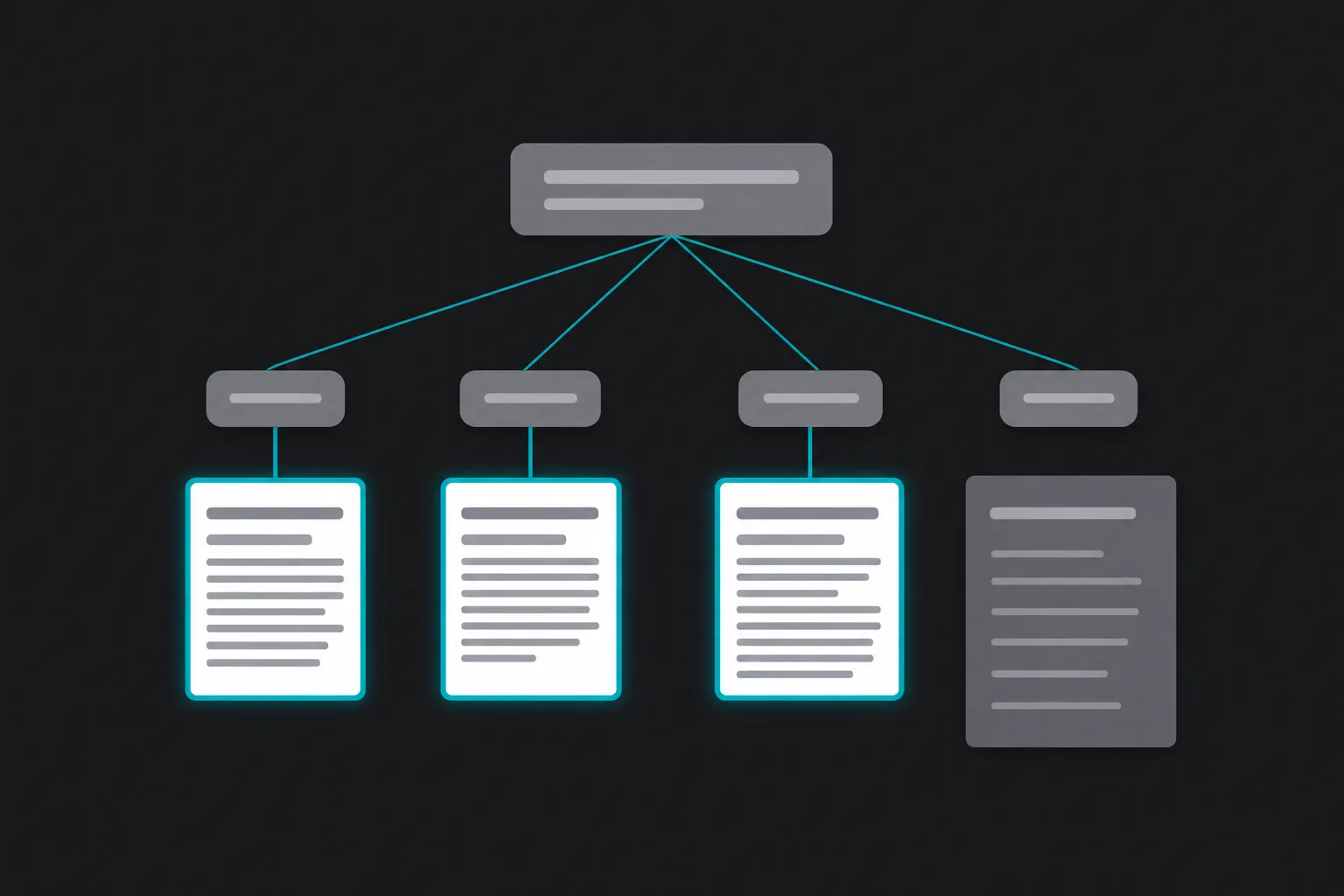
Most owners paying an agency “to run ads” have never had to make the choice between a lead generation system vs ad campaign, because nobody framed it as a choice. The invoice says “digital marketing.” The report shows impressions and clicks. But underneath that invoice, one of two very different things is happening: a campaign that turns on and off, or a system that keeps working whether or not anyone logs into Facebook Ads Manager this week.
These are not the same product wearing different names. They have different costs, different failure points, and different amounts of work required from you. If you’re evaluating whether to switch agencies or bring things in-house, this is the distinction that actually matters — more than creative quality, more than which platform gets the budget.
Lead generation system vs ad campaign: the question most owners never ask
Ask your current agency this: “If we paused ad spend for 60 days, what would still be working?” If the honest answer is “nothing,” you’re paying for a campaign. If the answer includes things like organic search rankings, a CRM full of past leads getting re-engaged, or review volume compounding on your Google Business Profile, you’re paying for something closer to a system.
Neither answer is wrong on its own. A campaign is cheaper and faster to start. A system costs more to build and takes longer to show results. The problem is when you’re billed system prices for campaign work — or when you assume a campaign will behave like a system and stop paying attention to the parts nobody built.
What a campaign actually delivers
A campaign is a defined, time-bound push: a budget, an ad set, a landing page, a start date and — implicitly — an end date, even if that end date is “whenever the client stops paying.” Most agencies are built to sell campaigns because campaigns are easy to price, easy to staff with junior account managers, and easy to report on with a screenshot of platform metrics.
Here’s what a typical campaign includes:
- Ad creative and copy for one or two platforms
- A landing page, sometimes reused across multiple clients with a logo swap
- A monthly report showing clicks, impressions, and cost per click
- Little to no connection to what happens after the form is submitted
That last point is where most of the money leaks out. The agency’s job, as they define it, ends at the lead. What happens to that lead — whether it gets called in five minutes or five days, whether it lands in a spreadsheet nobody checks, whether it’s ever compared against what closed — is your problem, not theirs. That’s not a criticism of any one agency; it’s how the pricing model is built. You can’t sell a $1,500/month retainer and also own CRM setup, call tracking, and follow-up automation. The math doesn’t work unless something gets cut, and follow-up is usually the first thing cut because it’s invisible on a platform dashboard.
What is a lead generation system, exactly
A lead generation system is the same ad spend, but wired into the rest of the business so a lead becomes a tracked event instead of a form submission that disappears into an inbox. Concretely, that means:
- The website is built to convert the specific traffic being paid for, not a generic template
- Call tracking and analytics attribute every lead back to the keyword, ad, or page that produced it
- A CRM holds every lead, tags its source, and tracks it through quote, booking, and job completion
- Follow-up — calls, texts, automated sequences — happens on a schedule, not when someone remembers to check
- Reporting shows cost per booked job, not just cost per click, because cost per click tells you almost nothing about whether the business made money
This is the model behind our own lead generation and digital marketing services: the ad spend is one piece, not the whole product. If a lead comes in and nobody calls it back inside an hour, the ad performance is irrelevant. The system’s job is to make sure that doesn’t happen, and to prove it with numbers — which is why cost per booked job is the number we report, not cost per lead alone.
Why ads alone don’t work for service businesses
Service businesses selling through booked appointments or quoted jobs have a longer, messier path from click to revenue than an e-commerce store. Someone doesn’t buy a roof replacement on a landing page. They fill out a form, or call, and then a human being has to reach them, qualify them, quote them, and close them — often across several conversations over days or weeks.
Ads alone don’t work in this model for a specific reason: the ad’s job ends the moment the lead is generated, but the sale doesn’t happen until weeks later. If nothing tracks that lead from first click through to booked job, you cannot tell which ads, keywords, or landing pages actually produced revenue versus which ones produced form fills that went nowhere. You end up optimizing for the wrong number — usually cost per lead — because it’s the only number anyone bothered to track.
We’ve managed enough ad spend across enough platforms — currently around $400,000 a month across 10+ platforms for various clients — to say plainly: campaigns that aren’t connected to a CRM and a follow-up process cost more per booked job, not less, even when the cost per lead looks good on a report.
What a marketing system for contractors has to connect
For contractors and trades specifically, the system has a few non-negotiable pieces, because the sales cycle involves phone calls, site visits, and quotes that don’t close same-day:
- A phone number that’s tracked, so every call is attributed to a source and recorded for quality control
- A CRM that logs every lead automatically, not one that depends on a technician remembering to write it down after a job
- An automated follow-up sequence for the leads that don’t answer the first call — most don’t
- A local SEO and Google Business Profile presence that keeps producing leads even during weeks when ad spend is paused, which our local SEO and Google Business Profile services are built around
- Reporting that ties spend to booked jobs, not just to leads or clicks
Skip any one of these and the ad spend still generates leads — it just generates leads that leak out of the business before they turn into revenue. This is the part most agencies won’t tell you, because building it isn’t part of what they sell.
What it costs to maintain a system — and why most agencies skip it
Here’s the trade-off, stated plainly: a system costs more to set up and more to maintain than a campaign. Someone has to build the CRM workflows, connect call tracking to the ad accounts, write the follow-up sequences, and — critically — keep checking that all of it still works when a platform changes its API or a form stops submitting correctly. That’s ongoing work, not a one-time build.
Most engagements built this way run in the range of $1,500–$6,000 a month plus ad spend, depending on how many systems need connecting and how much follow-up automation is required. That’s often comparable to what a campaign-only retainer costs — the difference isn’t always the invoice, it’s what’s included in it.
Agencies built around volume — dozens or hundreds of retainer clients — generally can’t afford to build and maintain this per client. The margin isn’t there once you add CRM implementation, call tracking setup, and ongoing monitoring for every account. So they don’t. They run campaigns, because campaigns scale across an account list and systems don’t.
Why a small client list matters for delivering this
This is the part that explains the trade-off rather than dodging it: keeping a small client list is what makes system delivery possible. Connecting a website, ad accounts, a CRM, and follow-up automation for one business takes real hours — reviewing call recordings, checking that leads are landing in the CRM correctly, adjusting a sequence that isn’t converting. Do that for 60 accounts and it becomes a campaign business whether you meant it to or not, because there isn’t enough time left to do the connecting work properly.
At Marketing & Technology, that’s the reason for staying deliberately small and for having Mathew — someone with 10+ years hands-on in plumbing, HVAC, electrical, and roofing before this — deliver the work directly instead of handing it to an account manager reading from a dashboard. One person accountable for the whole path from first click to booked job is a structural choice, not a slogan, and it only works at a client count where that’s actually possible. Learn more about how that setup works on the about page.
How to tell which one you’re currently paying for
A few direct questions will tell you which side of this you’re on:
- Can your current provider tell you cost per booked job, or only cost per click and cost per lead?
- If ad spend paused tomorrow, would leads still come in from SEO, past clients, or Google Business Profile?
- Does every lead land automatically in a CRM, or does someone have to enter it manually?
- Is there a documented follow-up sequence for leads that don’t answer the first call?
- Is one person accountable for the whole path, or does responsibility split between the ad agency, your office staff, and whoever built your website three years ago?
If most of those answers point toward gaps, that’s not necessarily a reason to switch agencies immediately — it’s a reason to fix conversion and follow-up before increasing ad spend further, since more traffic into a leaky system just means a bigger leak.
If you want a straight answer on whether your current setup is a campaign or a system, book a call with Mathew and go through it together — no obligation, and we’ll tell you plainly what’s missing, including if the honest answer is “not much.” You can reach out directly through the contact page.