Strategy
Why ChatGPT and Google's AI Answers Are Recommending Your Competitor, Not You
Ranking well on Google isn't enough anymore. Here's what ChatGPT and AI Overviews actually pull from, and how to show up in AI search results for contractors.

A homeowner in your service area types “best roofer near me” into ChatGPT instead of Google. Or they ask Perplexity to recommend a plumber who can come out today. The answer that comes back names three companies. Yours isn’t one of them — even though you rank in the top five on Google for the exact same search. This is happening more often, and most contractors haven’t figured out why. If you’re trying to work out how to show up in AI search results for contractors, the first step is understanding that these tools are not just a new flavour of Google. They read different signals, weight them differently, and ignore some things Google has rewarded for years.
This isn’t a future problem. It’s happening this quarter, in your market, to businesses that spent years building a solid Google presence and assumed it would carry over automatically.
Why Your Google Ranking Doesn’t Matter the Way It Used To
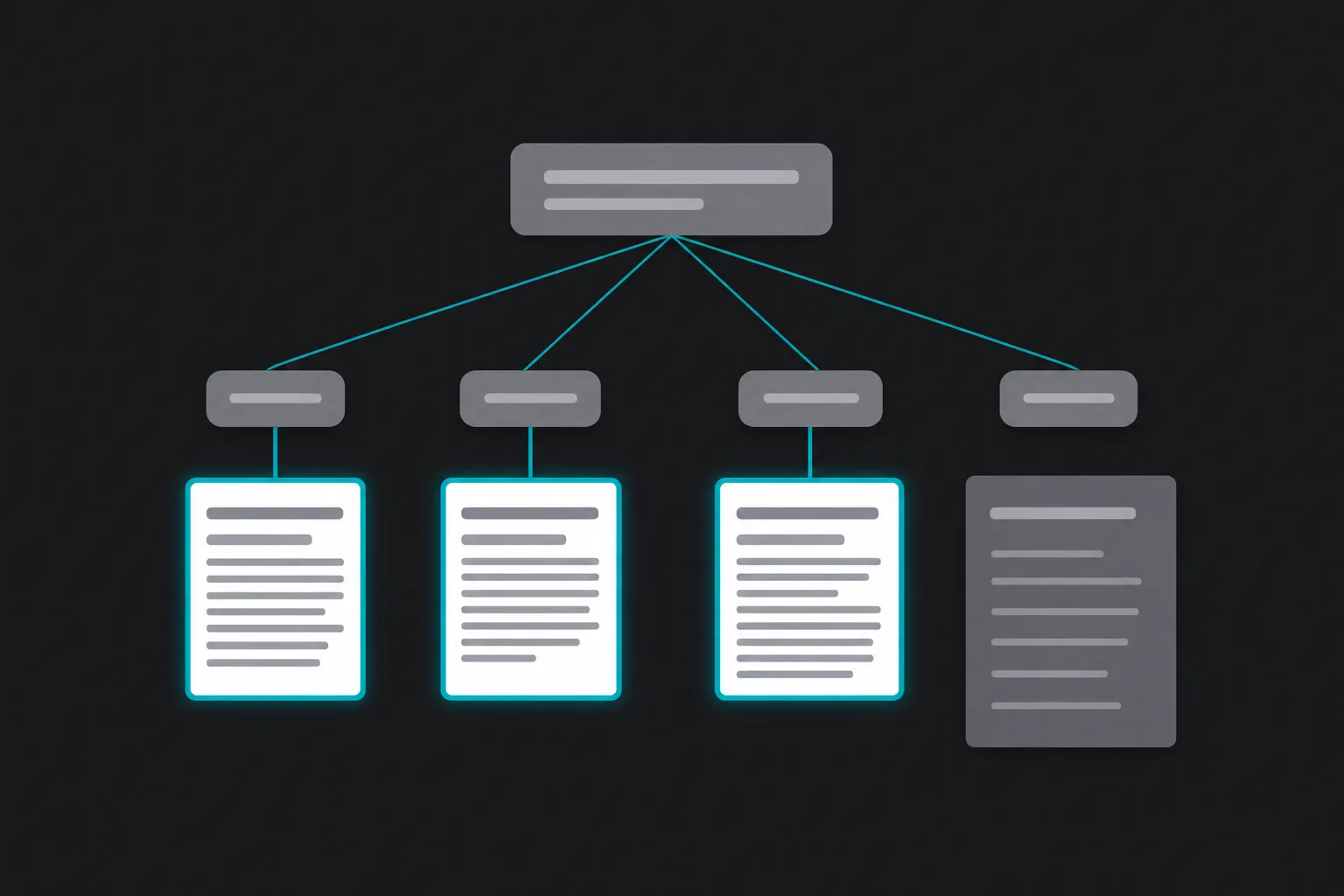
Traditional Google search shows you ten blue links and lets the searcher decide. Google AI Overviews, ChatGPT, and Perplexity do something different: they synthesize an answer and hand the searcher two or three names, not ten. If you’re not in that shortlist, you don’t get a lower ranking — you get nothing. No click, no phone call, no chance to make your case.
That’s the core shift. Search used to be a list you competed to climb. AI search is a filter that either includes you or doesn’t. There’s no page two.
A business can rank well in classic Google search and still disappear in an AI-generated answer, because the two systems are answering different questions. Google’s organic algorithm has spent two decades getting good at matching keywords to pages and rewarding backlinks and content depth. AI answer engines are trying to answer a much narrower question: “which business can I confidently recommend right now, with the least chance of being wrong?” That question gets answered with a different set of data.
What AI Tools Actually Pull From When Someone Asks for a Plumber, Roofer or Electrician
This is the part most contractors get wrong, because they assume it’s the same SEO work they’ve already paid for. It overlaps, but it isn’t identical. Based on how these systems behave in practice, here’s what they lean on:
- Google Business Profile data. Category accuracy, service area, hours, and how complete the profile is. A profile that’s 60% filled out competes against one that’s 100% filled out, and the gap shows up in what gets recommended.
- Review volume and recency. Not just star rating — how many reviews, how recent, and whether they mention specific services. “Great job” carries less weight than a review that says “replaced our furnace in Grimsby within a day of calling.”
- Site structure and clarity. AI tools favour pages that state plainly what you do, where you do it, and how someone books you. A homepage built around brand messaging instead of concrete service and location information is harder for these systems to extract confidently.
- Third-party citations. Directory listings, industry association pages, local news mentions — anywhere your business name, address and phone number appear consistently. Inconsistent data across these sources (an old address, a disconnected phone number) makes an AI tool less confident recommending you at all.
- Structured data markup. Schema that tells a machine exactly what kind of business you are, what you do, and where you operate — the difference between a page a human can read and a page a machine can parse cleanly.
Notice what’s missing from that list: keyword density, blog post volume, and most of the traditional levers agencies have sold contractors for the last ten years. Those things still matter for organic Google rankings. They matter much less for whether ChatGPT decides to say your name.
How to Show Up in AI Search Results for Contractors
There’s no single fix. It’s a combination of getting your data right and structuring your content so a machine can extract it with confidence. In practice, that means:
- Audit and complete your Google Business Profile — every field, every service category, updated service area, and photos that actually match the work you do.
- Increase review volume with specifics. A steady flow of reviews that name the service and the town beats a burst of generic five-star ratings once a year.
- Rebuild key pages around plain, structured answers. A page that says “we install tankless water heaters in Burlington and Oakville, same-week scheduling” gets pulled into an AI answer more easily than a page built around brand slogans.
- Clean up your citations. Same business name, same address, same phone number, everywhere your business appears online. This sounds basic. Most established contractors have three or four versions floating around from old listings, acquisitions, or a rebrand nobody finished updating.
- Add structured data markup to service pages, location pages and your Google Business Profile so search engines and AI tools can read your service area, categories and offerings without guessing.
This overlaps heavily with solid local SEO — see our Local SEO & Google Business Profile work — but AI answer engine optimization asks for a level of data consistency and structural clarity that a lot of “good enough” SEO work never bothered with, because Google’s classic algorithm was more forgiving of it.
What Doesn’t Help Anymore — and Never Really Did
A few things contractors still pay for that don’t move the needle here:
- Keyword stuffing. Repeating “emergency plumber Hamilton” fifteen times on a page doesn’t help AI tools trust you more. It often makes the page harder to parse.
- Thin location pages built for volume, not clarity. A page for every town within 50 kilometres, each with 200 words of filler, doesn’t read as authoritative to an AI system. It reads as noise.
- Buying reviews or review gating. Beyond the ethical and platform-policy problems, a spike of reviews that don’t mention specific services doesn’t carry the same weight as steady, detailed reviews over time.
- Chasing backlinks with no relevance. A link from an unrelated blog in another province doesn’t help an AI tool decide you’re the right electrician in Grimsby.
None of this is new advice dressed up for AI. It’s the same distinction that’s always separated marketing that produces booked jobs from marketing that produces invoices: work that reflects how the business actually operates versus work built to game a system that’s since moved on.
Why This Matters More at $1M–$20M Than at Any Other Size
A one-truck operation can survive on referrals and a Facebook page. A business running $1M to $20M in revenue on booked jobs and quoted work depends on a predictable flow of new inquiries, and that flow increasingly starts with a question typed into an AI tool rather than a Google search bar. If your competitor shows up in that answer and you don’t, you’re not losing rank — you’re losing the call before it happens, and you often won’t know it happened at all. There’s no notification that says “you were left out of an AI recommendation seventeen times this month.”
This is also where the connection between systems matters. A business with clean Google Business Profile data, a CRM logging every review request, and a website structured around real service pages is in a stronger position than one where the website, the review process and the ad spend are all handled by different vendors who don’t talk to each other. Disconnected systems tend to produce exactly the kind of inconsistent, incomplete data that AI tools discount. This is the same reason we push clients to fix conversion and data consistency before increasing ad spend — a bigger ad budget pointed at a system with messy underlying data doesn’t fix the underlying problem, it just makes the leak more expensive.
What to Check This Week
Before hiring anyone for this, spend twenty minutes on your own:
- Ask ChatGPT, Google, and Perplexity the exact question your customers ask — “who’s a good roofer in [your town]” — and see who comes back.
- Search your business name plus an old address or previous phone number and see what still turns up.
- Open your Google Business Profile and check whether every field is filled in, current, and matches your website exactly.
- Count how many reviews you’ve received in the last 90 days, and how many mention a specific service.
If the answers are uneven — strong on Google, absent in AI answers, inconsistent data across listings — that’s not a sign you need to start over. It’s a sign the underlying data and structure need work before another dollar goes into advertising.
We look at this as part of every audit: how a business shows up across both traditional and AI search, side by side, with the same review of Google Business Profile completeness, citation consistency and site structure described above. If you want to see where the gaps are for your business specifically, get a free marketing audit or book a call directly with Mathew.