Strategy
ChatGPT Has a Business Hub Now. If You Don't Claim Your Listing, It Writes Your Description For You
ChatGPT now lets businesses claim and verify their listing. Here's what that means for firms, clinics and shops that have never checked what ChatGPT says
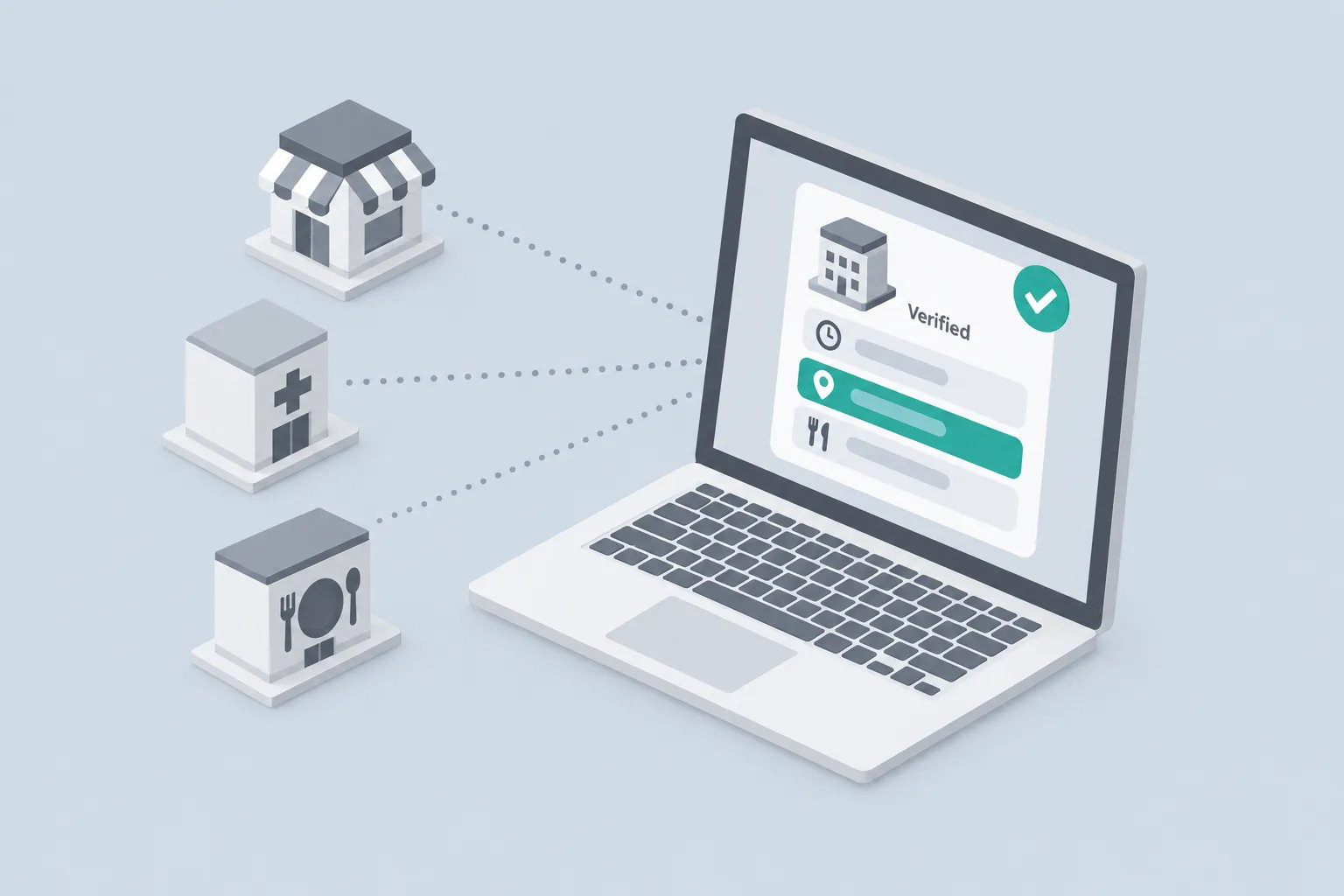
On November 12, ChatGPT rolled out a Business Hub where a company can claim its listing, verify its website and identity, and see insights on how it is being described in ChatGPT’s answers, as reported by Search Engine Journal. If you run an accounting firm, a clinic or a restaurant and have never once checked what ChatGPT tells people who ask about your business, this is the first time there has been a verified way to find out and correct it.
Most owners have not checked. There was no reason to until now. There was no claim process, no verification, no insight panel. ChatGPT simply answered questions about your business using whatever it had pieced together from the web, and you had no way to know if it was right.
What changed, and when
According to Search Engine Journal’s November 12 report, the Business Hub gives a company three things: a way to claim its listing inside ChatGPT, a way to verify the website and identity behind that listing, and insight into how ChatGPT is describing the business in its answers. That is the extent of what has been confirmed. This is not a guarantee of better placement or more favourable mentions. It is visibility into something that was previously a black box, plus a verified channel to correct it.
That distinction matters. For years, claiming a Google Business Profile meant you controlled your hours, your category, your photos, and your reviews showed up where customers were looking. ChatGPT’s Business Hub is the early version of that same idea, but for a different surface: the answer someone gets when they ask ChatGPT a question instead of typing it into a search box.
Why this matters if you run a clinic, firm, restaurant or B2B company
Think about what people are already asking ChatGPT instead of Google. A patient asks which clinic in their area takes new patients and does direct billing. A business owner asks which accounting firm handles corporate tax filings for a company their size. Someone planning a dinner asks which restaurant downtown has a gluten-free menu and is open on Mondays.
If the answer ChatGPT gives is wrong, outdated, or names a competitor instead, that lead never reaches your website. It never reaches your phone. It is gone before you knew it existed, because the conversation happened entirely inside ChatGPT and ended there.
This is not hypothetical. Hours change. Services get added or dropped. Locations move. A dental practice that used to be in one plaza and relocated two years ago may still be described by its old address if nothing was ever done to correct the record it was built from. An accounting firm that added advisory services last year might still be described only as a tax prep shop. A B2B company that stopped offering a legacy product line might still be recommended for it, to a prospect who then shows up asking for something you no longer sell.
What claiming and verifying actually gets you
Based on what Search Engine Journal reported, claiming your listing and verifying your website and identity is how you establish that you are the authoritative source for information about your own business, inside ChatGPT. The insights component shows how your business is currently being described, which is the part most owners will find useful immediately, because right now they simply do not know.
It does not force ChatGPT to mention you more often. It does not move you above a competitor. What it does is give you a documented, verified way to see the description and, where the source material is wrong, go fix it at the root, whether that is your website’s structured content, your Google Business Profile, or directory listings that are feeding inaccurate information into the model.
Three things to check this month
- Ask ChatGPT about your own business directly. What are your hours, where are you located, what do you offer, who are you compared to. Do this before you do anything else. You cannot fix a description you have not read.
- Claim and verify your listing in the Business Hub. This is the step Search Engine Journal’s report centres on. It is a direct, verified channel that did not exist before November 12.
- Correct the source, not just the listing. If ChatGPT has your hours wrong because your website’s footer has your hours wrong, fixing the Business Hub entry without fixing the website is a patch, not a repair. The underlying content is what the model is drawing from in the first place.
What this does not fix
A claimed, verified listing does not mean ChatGPT will recommend you over a competitor. It does not replace the work of having a website with clear, specific, structured information about what you do, who you serve and where you operate. A restaurant with three sentences of vague marketing copy on its homepage gives a language model very little to work with, verified listing or not. A clinic whose service pages read like brochure copy rather than plain descriptions of what is actually offered is harder for any AI system to describe accurately, because there is nothing precise to describe.
Claiming the listing is the accuracy layer. Getting named and described well in the first place is a separate, ongoing piece of work: writing content that is specific enough and structured clearly enough that ChatGPT, Perplexity and Google’s AI Overviews can cite it correctly. That is the work behind AI search visibility, and it has very little to do with ranking for keywords the old-fashioned way.
Where this fits in a bigger shift
This is one more sign that the ground under local visibility has moved. Businesses spent fifteen years learning to manage their Google Business Profile, their reviews, their local pack rankings. That work was never optional for a clinic, a restaurant or a professional services firm that depends on being found nearby. ChatGPT’s Business Hub is the same category of work, on a newer surface that a meaningful share of your prospects are already using instead of, or alongside, Google. Ignoring it does not mean the conversation stops happening. It means you stop being part of it.
If you have not looked at your Google Business Profile in a while either, this is a good month to do both at once, because the same gaps, wrong hours, outdated services, missing locations, tend to show up in both places.
Get a free marketing audit
If you run a business that grows through leads, bookings or quotes and you have never checked what ChatGPT says about you, that is the first thing to find out, and it takes five minutes. If what you find needs fixing, that is a conversation worth having before it costs you another lead. Get a free marketing audit, or book time directly with Mathew to go through it together.