Strategy
Leads Not Showing Up in CRM: Where Inquiries Disappear Before You Ever See Them
Calls, texts and form fills that never reach your CRM don't show up as a problem — they just don't show up. Here's where they go and how to check.

Ask most owners of a $1M–$20M service business how their leads flow, and they’ll say something like: “Calls come in, forms come in, we follow up, it’s all in the CRM.” Ask them to prove it, and most have never actually checked. That’s the real issue behind leads not showing up in CRM — it’s not a bug people notice and fix. It’s a gap nobody looks for, because a missing lead doesn’t announce itself. It just isn’t there.
A pipeline report that’s missing 20% of your inquiries doesn’t look broken. It looks clean. That’s the trap.
The problem nobody audits: leads not showing up in CRM
Most articles about lead follow-up start from the assumption that the lead already made it into the system — now it’s a question of speed, scripts, and persistence. That assumes too much. Before you can fix follow-up, you have to know the inquiry got logged anywhere at all.
Here’s what actually happens in a lot of trades and home improvement businesses on a Tuesday afternoon: a homeowner calls the number on a truck decal. It rings a cell phone in someone’s pocket. The tech answers between jobs, gives a rough quote, says “we’ll get you booked in,” and hangs up. No CRM entry. No call recording. No record that the call happened. If the job books, great — but nobody can tell you what it cost to get it, because it was never counted as a lead in the first place.
Multiply that by every channel a business runs today — phone, text, Google Business Profile messaging, contact forms, Facebook messages — and the number of inquiries that never reach a central system can be substantial. You don’t know the number, because you’re not tracking what you’re not tracking.
Why this looks like a follow-up problem — it isn’t
When an owner suspects something’s wrong with lead generation, the instinct is to look at follow-up speed or ad performance. Those are real issues, but they’re downstream of a bigger one. If the CRM only shows the leads that happened to get typed in manually, your follow-up numbers are already skewed before anyone picks up the phone.
This is the core of why leads get lost: not because staff are careless, but because the systems were never built to catch every channel in the first place. A missed call gets a callback from personal judgment, not a workflow. A form fill goes to an inbox that three people can see and nobody owns. A Google Business message gets a reply from whoever happened to check the app that day. Each one might get handled fine in the moment. None of it gets counted.
The four places inquiries go missing
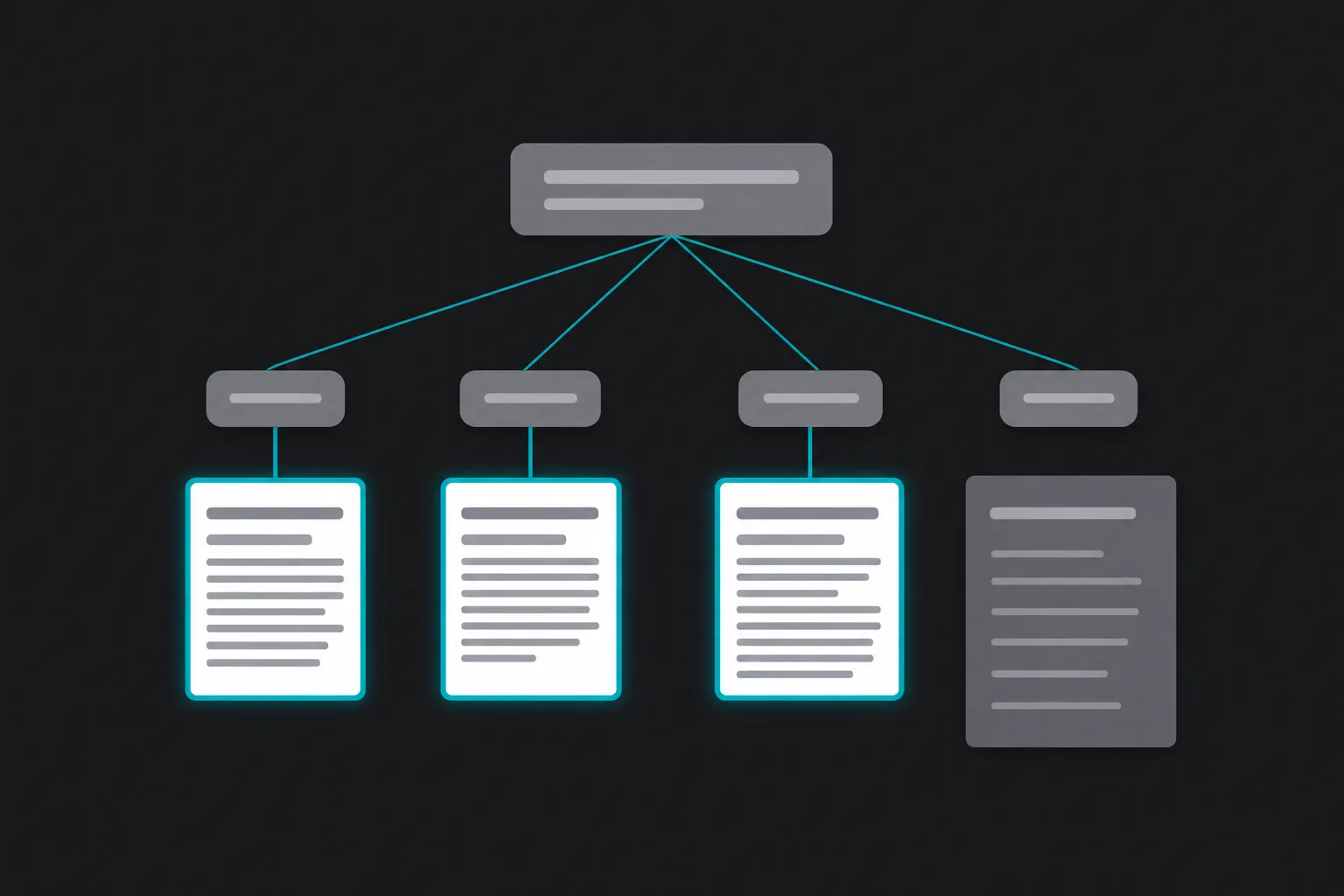
In audits of service businesses running quoted jobs and booked appointments, the same four gaps show up again and again:
- Phone calls that ring a personal or shared cell phone. No call tracking number, no recording, no automatic log. If the tech answers and handles it, the business owner has no record it happened — good or bad.
- Google Business Profile messages answered from someone’s personal device. These are increasingly where inquiries start, especially for local searches. If the profile is tied to a personal account instead of a shared, tracked one, those conversations live and die outside any system.
- Text replies that live in a tech’s phone. A customer texts the number on an invoice or a truck. The reply comes from whoever’s phone that number happens to be, and the thread never syncs anywhere else.
- Form fills not syncing to CRM. This is the one people assume is solved because “we have a form on the website.” But a form that emails a notification isn’t the same as a form that creates a CRM record. If the integration breaks — a plugin update, a changed email address, a spam filter — submissions can silently stop syncing for weeks before anyone notices, because the website still says “thank you, we’ll be in touch.”
Each of these is a lead tracking gap that’s common in contractor and trades businesses specifically, because so much of the work has historically been handled by phone, by the guy in the truck, informally and fast. That instinct built a lot of these businesses. It also built the blind spot.
Why leads get lost: the trades habit of answering informally
This isn’t a criticism — it’s how the trades have always worked, and for good reason. Someone calls with a leaking pipe or a furnace out at 6 a.m. in January, and the priority is getting a tech there, not filling out a form. That instinct to just answer and go is part of what makes trades businesses good at the actual work.
The problem shows up at scale. What works fine when one person answers every call for a two-truck operation breaks down once a business is running six figures a month in ad spend, multiple techs fielding calls, a dispatcher, an office manager, and a website generating form fills around the clock. At that size, informal handling isn’t a shortcut anymore — it’s a hole in the data big enough to make every marketing decision unreliable.
What call tracking CRM integration actually fixes
Call tracking numbers, properly connected to a CRM, do one specific thing: every call gets logged, timestamped, recorded, and attributed to the channel that generated it — a specific ad, a specific page, a specific Google Business listing. No manual entry required. The same principle applies to form fills, text messages, and business messaging platforms — the goal is one system that captures the inquiry the moment it arrives, regardless of which door it came through.
This isn’t about surveillance or micromanaging techs. It’s about being able to answer a basic question: how many people tried to reach us last month, through which channel, and what happened to each one? Most businesses can answer that question for form fills. Few can answer it for calls, texts, and messages combined.
You can’t manage cost per booked job with holes in the data
We measure our own work on one number: cost per booked job. Right now our average cost per issued appointment across managed accounts is $423, and average cost per lead is $146, tracked to the dollar. Those numbers only mean anything because every lead that enters the funnel is counted — call, text, form, message, all of it, in one system.
If a business is missing 15–20% of its inquiries because they never made it past a personal cell phone or an unsynced form, then cost per booked job isn’t a real number. It’s a number calculated from partial data, presented with full confidence. That’s worse than not knowing, because it looks like certainty.
This is the same reason we won’t increase ad spend for a client before checking that conversion and follow-up actually work end to end. Spending more to generate leads that fall into the same gap just makes the gap more expensive.
How to check your own system
You don’t need a full audit to get a rough answer. A few checks, done honestly, will tell you most of what you need to know:
- Call the main number on your website from a personal cell phone. See where it rings, whether it’s recorded, and whether anything shows up in your CRM afterward.
- Send a message through your Google Business Profile. Time how long it takes to get a reply, and check whether that conversation exists anywhere outside the app it arrived in.
- Submit your own contact form. Confirm it creates a record in your CRM — not just an email notification, an actual record with a timestamp and source.
- Text the number on your last invoice or truck decal. Find out whose phone answers, and whether that thread is visible to anyone else in the business.
If any of those checks turn up a gap, you’ve found a lead tracking gap that’s been costing you data for as long as it’s existed — possibly without costing you the job itself, which is exactly why it’s easy to miss.
This is also the starting point for proper CRM implementation: not adding more software, but making sure every channel that generates an inquiry feeds the same system, so a lead follow-up strategy has something real to act on. You can read more about how we approach connected systems on our digital marketing services overview.
If you want an outside look at where your own inquiries actually go before they reach anyone who can act on them, get a free marketing audit. We’ll check your phone routing, your Google Business messaging, your form integrations, and your CRM to see how many of your channels actually feed one system — and how many are quietly leaking leads you’re already paying to generate. Book time with Mathew to get started.