Strategy
How to Get Your Business Mentioned by AI When a Competitor Keeps Showing Up Instead
ChatGPT names your competitor instead of you? Here's why AI assistants pick who they mention, what to check today, and what actually changes the answer.

An owner called us after typing his own trade into ChatGPT out of curiosity. He ranks on page one of Google for the same search. The AI assistant named two competitors and never mentioned him. That’s the question behind this article: how to get your business mentioned by AI when you’re already doing the things that used to guarantee visibility. The short answer is that Google rankings and AI mentions are answering two different questions, and fixing one doesn’t fix the other.
This isn’t a hypothetical problem anymore. More people are asking ChatGPT, Perplexity and Google’s AI Overviews the same question they used to type into a search bar — who does this near me, what’s the going rate for this job, who’s reliable for this kind of work. If the assistant never says your name, you don’t lose a ranking. You lose the conversation entirely, before you knew it happened.
Why AI assistants name your competitor and not you
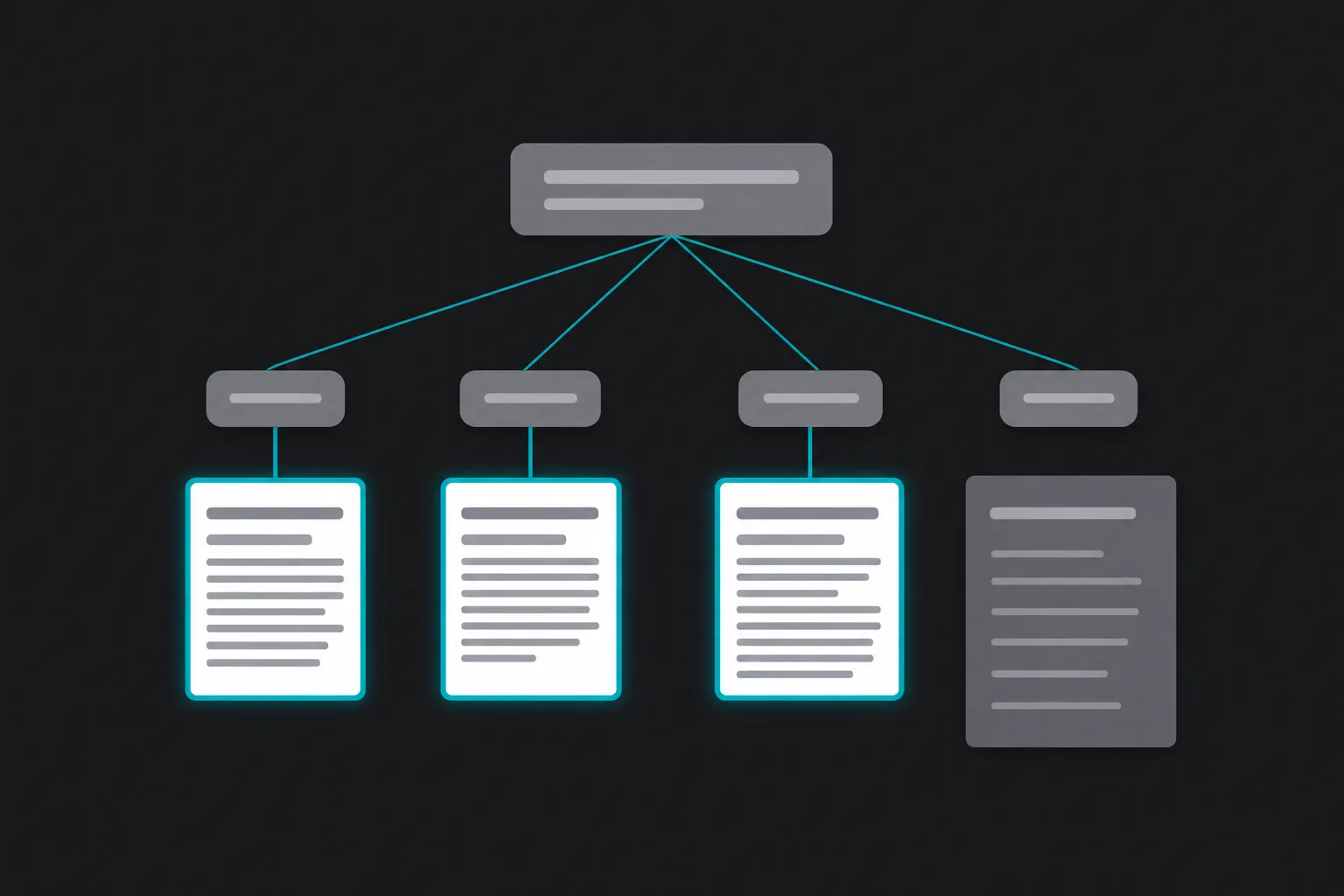
Google’s search results are a ranked list of pages. It sends the searcher to a URL and lets them decide. An AI assistant does something different: it reads across many sources, decides what’s true and relevant, and writes a short answer with a small number of businesses named in it. There is no list to climb. There’s a paragraph, and you’re either in it or you’re not.
That means the assistant isn’t asking “whose page has the right keywords.” It’s asking something closer to “what has been said about businesses in this category, clearly and consistently, that I can repeat with confidence.” If your competitor’s name shows up on their own site, their Google Business Profile, a local directory, a review platform and a couple of industry pages — all describing the same service area, the same specialty, the same basic facts — that consistency is exactly what a language model is built to pick up on and repeat. If your business is described five different ways across five different places, or barely described anywhere outside your own homepage, there’s less for the model to grab onto and less reason for it to be confident naming you.
This is the practical meaning of answer engine optimisation: it isn’t a new set of keywords to chase, it’s making sure what’s true about your business is stated the same way everywhere it appears, so an AI system can lift it with confidence.
How to get your business mentioned by AI
There’s no submission form for this. You can’t buy a ChatGPT business listing the way you can buy an ad. What you can do is control the raw material the assistant is drawing from:
- Your own site should state, in plain sentences a model can quote, what you do, where you do it, and what makes you different — not buried in a hero image or a slogan, but written out.
- Your Google Business Profile needs to match that description exactly: same service categories, same area, same specialty language, kept current.
- Third-party sources — directories, review platforms, local news, trade associations, supplier or manufacturer pages that list dealers — need to describe you consistently, not contradict your own site or each other.
- Reviews that mention specifics (the type of job, the neighbourhood, the outcome) give the model concrete detail to repeat. Generic five-star reviews with no detail don’t give it much to work with.
None of this is keyword stuffing. It’s the opposite: it’s writing plainly and repeating the same true facts in enough places that an AI system trusts them enough to say your name out loud.
Run this test yourself before you change anything
Before hiring anyone or rewriting a website, spend twenty minutes doing this:
- Open two different AI assistants — for example ChatGPT and Perplexity, or an AI Overview in Google.
- Ask each one the exact question a customer would type: “who’s a good [your trade] in [your city]” or “how much does [your service] cost in [your region].”
- Write down, verbatim, which businesses get named and in what order.
- For each business named, go look at what’s actually published about them — their site, their Google Business Profile, any directory listing, any review with detail in it.
- Compare that to what’s published about your own business, in the same places.
You’re not looking for a trick. You’re looking for the gap between how clearly a competitor is described across the internet and how clearly you are. That gap is almost always the answer to why you weren’t named.
What actually moves the needle
A few things consistently matter more than people expect:
Specificity beats polish. A page that says “we install tankless water heaters, service the Hamilton and Burlington area, and typically respond same-day for no-heat calls” gives a model more to work with than a beautifully designed homepage that just says “quality service you can trust.”
Consistency across sources beats volume. Ten mentions that all describe you the same way are worth more than fifty mentions that contradict each other on service area or specialty.
Structured facts help. Clear service pages, a complete and current Google Business Profile, and content that states what you do in plain language — this is the groundwork of SEO and AI search work now, alongside traditional ranking factors, not instead of them.
Local listings still matter. A profile that’s incomplete, out of date, or missing categories is one of the most common reasons a business gets skipped over. This overlaps heavily with ordinary local SEO and Google Business Profile work — it’s not a separate discipline, it’s the same groundwork read by a different kind of reader.
What nobody can honestly promise you
Be skeptical of anyone who tells you they can guarantee a mention in an AI answer, or promise a specific ranking or placement inside ChatGPT, Perplexity or an AI Overview. Nobody controls how these models weigh sources, and the models themselves change behaviour without notice. What can be done — reliably and honestly — is improving the underlying material the models draw from: clearer descriptions, consistent facts, more third-party sources that say the same true things about you. That improves your odds. It does not guarantee an outcome, and anyone claiming otherwise is selling something they can’t deliver.
What to do this month
Run the two-assistant test above and write down exactly who gets named. Then open the sites and profiles of whoever got named and read what they’ve published that you haven’t — specific service descriptions, current listings, detailed reviews, third-party mentions that repeat the same facts your own site does. Fix the gaps you can control. That’s the whole first step, and it costs nothing but time.
If you want a second set of eyes on what’s showing up about your business right now, and what’s realistic to fix versus what’s noise, you can get a free marketing audit or look at how this fits into a full system on the digital marketing services page.