Strategy
Why Leads Don't Get Followed Up — And Why It's Not a Lead Problem
Most service businesses don't have a lead problem — they have a follow-up problem. Here's what happens to a lead between the form submit and the callback.

A homeowner fills out your contact form at 7:40pm on a Tuesday. Nobody calls until Friday morning. By then they’ve booked with the company that called Wednesday. This is the most common reason we hear about why leads don’t get followed up — not a shortage of leads, but a gap between the form submitting and a human picking up the phone. We see this pattern across nearly every trades and service business we’ve worked with, before any changes to ad spend or targeting.
Most owners come to us wanting more leads. When we pull the numbers, the lead volume is often fine. What’s broken is everything between the form submit and the first phone call.
What actually happens after the form submits
Here’s the sequence that plays out in a lot of shops running $1M–$20M in revenue, whether the trade is HVAC, roofing, electrical, or general contracting:
- The form submits. An email notification goes to an inbox that three people have access to and nobody checks consistently.
- The lead lands in a CRM — if there is one — as a new record with no owner assigned.
- The office manager sees it Wednesday morning between two other things and adds it to a call list.
- The estimator gets the call list Wednesday afternoon, but he’s on a roof until 4pm.
- He calls at 4:45pm. No answer. He doesn’t try again.
- By Friday, the lead has been called once, voicemail left, and forgotten.
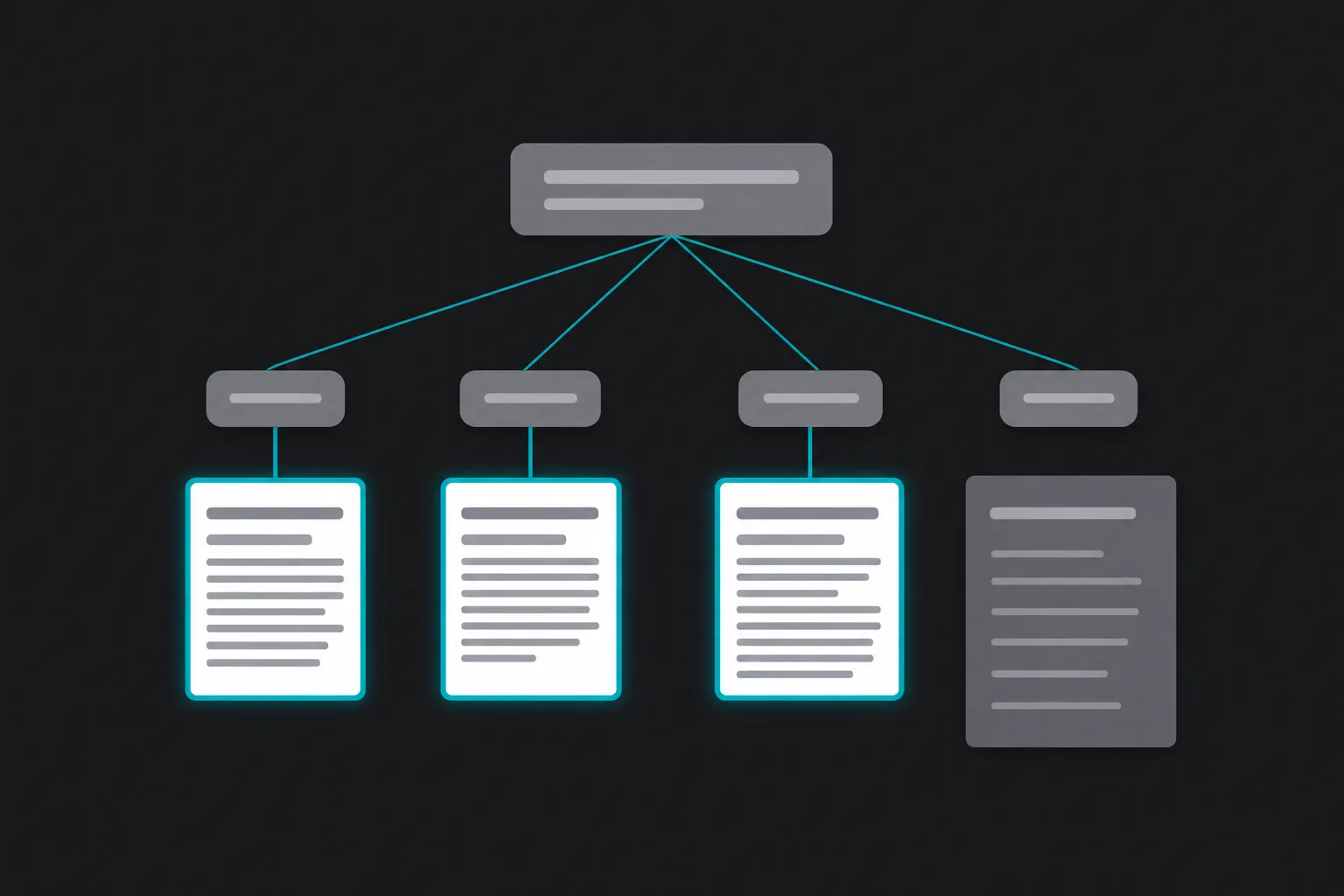
Nobody in that chain did anything wrong by the standards of their job. The office manager isn’t paid to chase leads. The estimator is paid to sell jobs he’s standing in front of, not chase ones that came in over the weekend. That’s the actual problem — the follow-up step has no owner, so it defaults to whoever has five minutes, and five minutes usually isn’t enough.
Why leads don’t get followed up
When we go through a client’s CRM for the first time — assuming they have one, which isn’t universal even at $8M in revenue — the pattern is almost always the same. Leads aren’t lost. They’re sitting there, untouched, for two to five days. Nobody deleted them or ignored them on purpose. They just didn’t get an owner.
Three things cause this, and they show up together more often than not:
- No single person is accountable for first contact. If a lead can go to “the team,” it goes to nobody. The moment a lead has no named owner with a clock running, it sits.
- The CRM logs the lead but doesn’t force action. A record sitting in a pipeline stage isn’t the same as a task assigned to a person with a deadline. Most CRMs can do the second thing. Most installs never turn it on.
- Follow-up competes with billable work. A technician or estimator calling leads is time not spent on a job that’s already sold. Without a dedicated follow-up role or automated first touch, the callback loses that competition every time.
None of this is a discipline problem you fix by asking people to try harder. It’s a process gap. The fix is structural — someone or something owns the first call within a defined window, every time, regardless of who’s busy.
A Tuesday, hour by hour
It’s worth walking through what a lead’s actual experience looks like, because the damage happens faster than most owners assume.
Response time research outside our industry consistently shows that contact attempts made within the first five to ten minutes convert at meaningfully higher rates than attempts made hours later — and that the odds drop fast after that. We don’t need outside research to tell us this. We track cost per lead and cost per issued appointment for our own clients, and the accounts with fast, consistent first response post a materially lower cost per booked job than the ones where follow-up depends on whoever’s free.
Here’s the version that plays out badly:
- 7:40pm Tuesday — Form submits. Notification email sent.
- 7:41pm–next morning — Nothing happens. Office is closed. No after-hours process exists.
- 9:15am Wednesday — Office manager sees the email among 40 others.
- 2:30pm Wednesday — Lead gets added to a call list, unassigned.
- 4:45pm Wednesday — First call attempt. Voicemail.
- Thursday, Friday — No second attempt logged anywhere.
Three days pass. In that window, most homeowners have already called two other companies. The lead isn’t gone from your CRM — it’s sitting right there, marked “new,” as evidence of a system that has no first-response owner and no automation to close the gap while a human gets free.
What a working follow-up system looks like
None of this requires exotic tools. It requires ownership and a couple of automated backstops. In practice, a working system has these pieces:
- An assigned owner for first contact, named, not “the team,” with a response window measured in minutes during business hours.
- An automated first touch — a text or email that goes out the moment the form submits, confirming receipt and setting expectations, so the lead isn’t sitting in silence even if the phone call is a few hours out.
- A follow-up automation sequence for leads that don’t answer the first call — a scheduled second and third attempt, spaced over days, not left to memory.
- A dashboard or report that shows response time as a number, not a feeling. If nobody can tell you the average time between form submit and first call this month, that’s the first thing to fix.
- A defined process for after-hours and weekend leads, since a large share of service business leads come in outside the 9–5 window when nobody’s watching the inbox.
This is what we mean by lead response & follow-up and workflow automation when we talk about them as services rather than features. It isn’t one tool bolted onto the website. It’s a process with a clock on it, backed by automation that covers the gaps a person can’t.
Where the CRM fits — and where it doesn’t
A CRM for contractors is supposed to solve this. In practice, most installs we inherit are used as a filing cabinet — a place leads go to be recorded, not acted on. The pipeline stages exist. The automated task assignment, the SLA timers, the missed-call text-back — those features usually sit turned off, because nobody set them up when the CRM went in.
This is the difference between having a CRM and having a system. The CRM is the record. The system is what forces someone to act on that record within a set window, every time, whether they remember to or not. We’ve implemented CRMs for clients who already owned the software for two years and had never used more than the contact list. The tool wasn’t the problem. Nobody had built the accountability around it.
What three days of silence actually costs you
We measure our own performance on one number: cost per booked job. It’s the only number that tells you whether the money spent generating a lead actually turned into a job on the calendar. A slow follow-up process quietly inflates that number without ever showing up as a line item, because the leads that go cold don’t disappear from your ad spend — they just stop converting.
If your average cost per lead is reasonable but your close rate is low, the leak usually isn’t the ads or the quality of the leads. It’s the three-day gap between the form and the phone call. Fixing conversion and follow-up before spending more on advertising is the right order of operations — increasing ad spend into a broken follow-up process just means paying more for leads that sit in the same CRM, untouched, for the same three days.
You can learn more about how we approach this on our digital marketing services page, or read about how we work on the about us page.
If you already have a CRM or a lead list and suspect some leads are falling through, the fastest way to find out is to look at the actual timestamps — form submit versus first call — for the last 30 days. Most owners haven’t looked, because nobody’s ever pulled that report for them.
Get a free marketing audit and we’ll show you how long leads are actually sitting in your current setup before anyone calls them back. You can book time with Mathew directly to go through it.